
MDCXLV
Barthold van Blaffen
Notary of the Hound Quarter
PawForge Art is a one-person studio run from Wisconsin. Every portrait you commission is rendered by an algorithmic hand in the manner of the great masters and printed to order by our framing partner. The studio reviews each one before it goes to print.
One person runs the studio: the same person who chose the traditions, wrote the prompts, reads the flagged reviews and looks at every draft before it goes to print. For now this page is written under the studio's name rather than a person's. Everything on it is true of how the studio runs today.
A studio example from the collections, shown in the gallery's frame. A commission begins with your own photograph.
You upload one photograph of your pet and choose a tradition. A painted-style portrait is rendered from that photograph, you see a free proof, and the one you approve is printed to order by our framing partner, on canvas or as a phone case.
The step-by-step, with what each product costs, is on the process page.
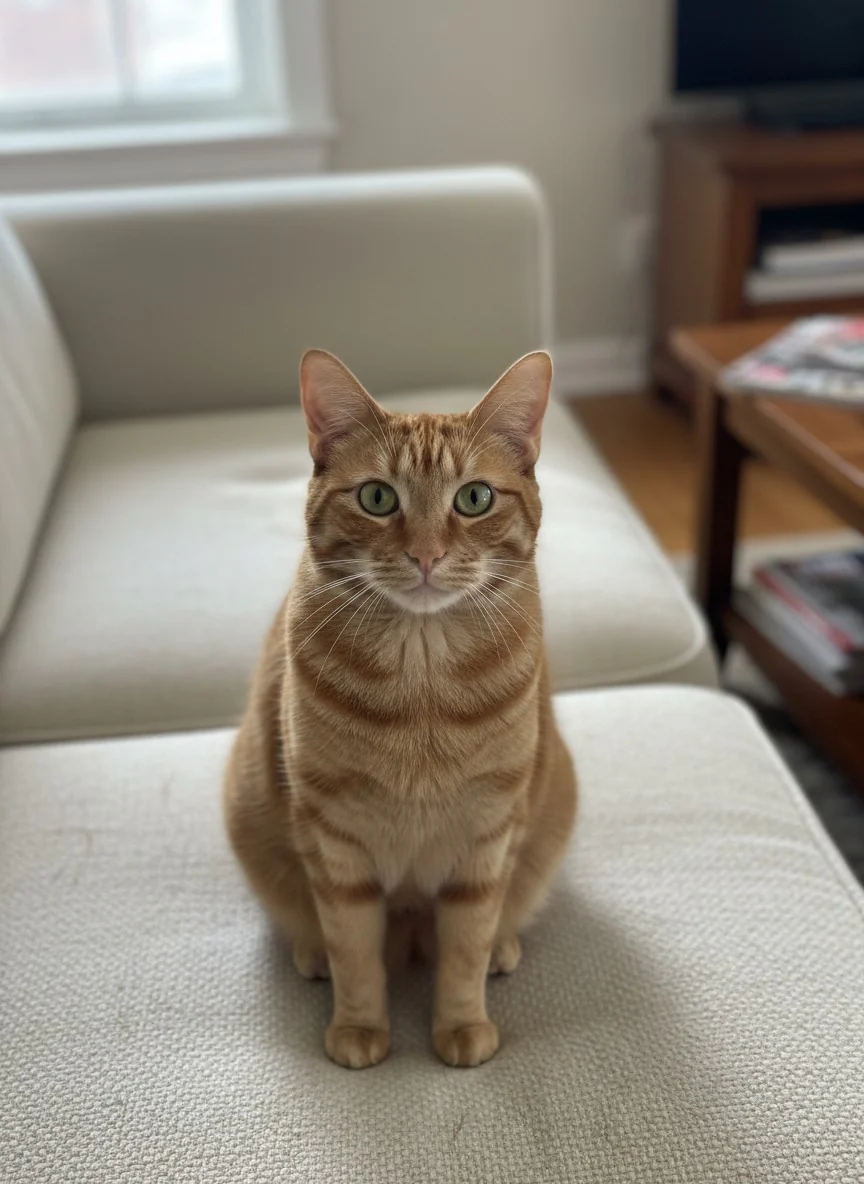
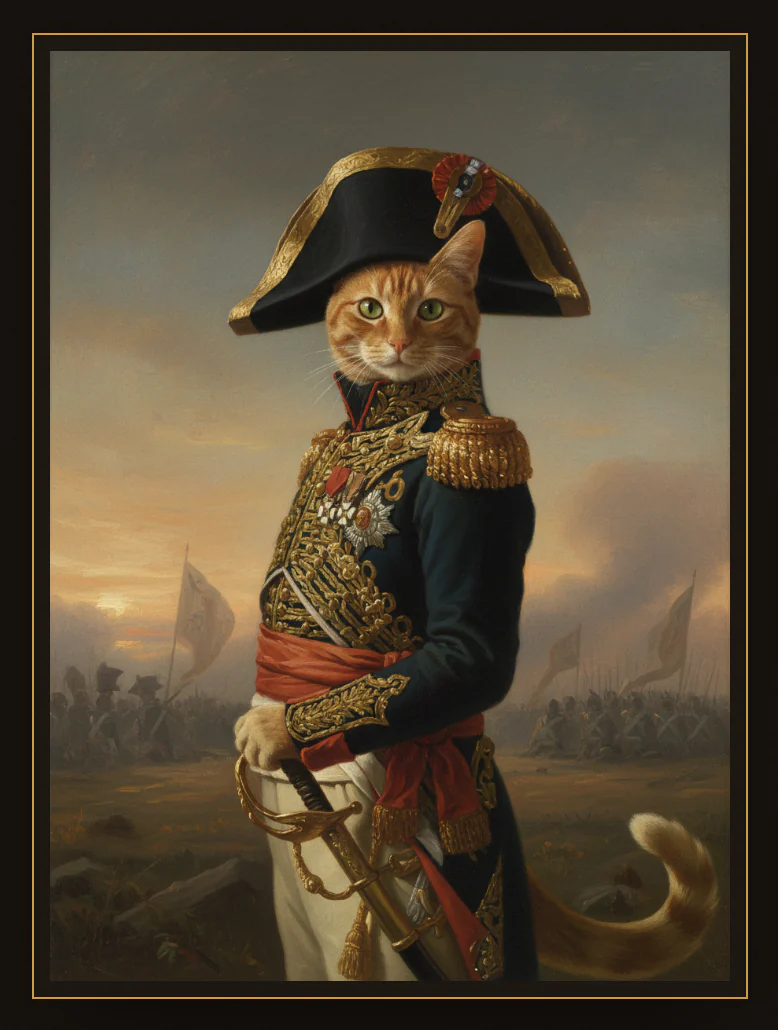
Drag or use the arrow keys to compare · Example source image, AI-generated, not a customer's pet.
The AI-generated example photo and its free proof, the same real screens the process page shows.
Every free proof goes through these checks.
Before a free proof renders, a quick check asks whether there is an animal in the photograph. A photo with none is refused rather than rendered. If that check cannot run, the render goes ahead (see what the checks can miss, below).
Every render is reviewed by a vision model. It compares the eyes and the identity of the animal with your own photographs, and checks the face, body and limbs, that the portrait is complete and fills the frame, that it does not show a canvas inside the canvas, and that it carries no artefacts or invented signature; it also records any lettering in the studio's log.
A render that fails a serious check is rendered again once, with the failed point reinforced. If it fails again, that portrait is not shown to you.
A render that fails a lesser check twice is flagged for a person's review before any order of it is printed, rather than refused.
Once a portrait is ordered, its edges are measured for a border, and a border is flagged for the same review.
Before any order is sent to print, a person opens the draft and zooms into all four corners. A canvas with a real defect, and any product with an invented signature, is held.
A held canvas is re-rendered free of charge, and you approve the new proof before it prints. A held phone case, which you approved as composed and which cannot be re-rendered once paid, is refunded; if your proof is still open you may choose again at the normal price.
The automatic review can pass a flaw it was not built to see. A render that fails a lesser check twice is flagged rather than refused, so the person who reviews drafts is the last check before printing, and a person can miss things too. A free proof that is never ordered is not looked at by a person. If a check cannot run at all, the render goes ahead and the failure is logged and counted in the studio's daily report, so an outage never strands your order. If a canvas or phone case arrives faulty or damaged, we replace it or refund you; the refund page says how.
The portraits are AI-rendered, and the ones you order are reviewed by the studio. The site's writing is drafted with AI tools and checked by the studio before publishing. What ships is a print on canvas, or a phone case, of an AI-rendered, painted-style image.
See it with your own pet.